

Stingless Honey Bees, which as also known as Meliponines or just Stingless Bees, are a group of around 500 bee species, comprising the tribe Meliponini, or subtribe Meliponina according to some. They are from the Apidae family same as honey bees, carpenter bees, orchid bees, and bumblebees. Stingless Bees still have stingers (go figure), but they are highly reduced and cannot be used for defense. They are not unique in the bee world as being the only bees to be ‘stingless’; all male bees and many females from other families like Andrenidae also cannot string.
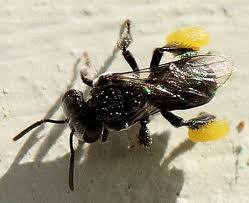
Stingless bees are found in most tropical or subtropical regions of the world, they make their homes in Australia, Africa, Southeast Asia, and tropical America. The majority of native eusocial bees of Central and South America are stingless bees. Their numbers are quite diverse in Africa, Asia and South America where they are farmed for the prized medicinal qualities of the meliponine honey or sugarbag. Australian species of stingless bees can be kept in hives for pollination and honey harvesting and is becoming very popular. No wonder really, being stingless these bees are very easy to work with great pollinators of all different types of crops and produce an amazing medicinal quality, honey. The review Stingless Bee Honey, the Natural Wound Healer in the Journal of Skin Pharmacology and Physiology stated the following.
“Antioxidant in stingless bee honey could break the chain of free radicals that cause a detrimental effect to the wounded area. Furthermore, the antimicrobial properties of stingless bee honey could overcome the bacterial contamination and thus improve the healing rate. Moreover, the anti-inflammatory attribute in this honey could protect the tissue from highly toxic inflammatory mediators. The moisturizing properties of the honey could improve wound healing by promoting angiogenesis and oxygen circulation.”
As Stingless Bees live in warmer climates they tend to be pretty active all year round, although they too are less active in cooler weather, with some species presenting diapause (dormancy of sorts). Unlike other eusocial bees, they do not sting but will defend using other behaviours and mechanisms an example being by biting if their nest is disturbed. A few species in the genus Oxytrigona have mandibular secretions, including formic acid that cause painful blisters. Despite a lack of a sting, stingless bees (being eusocial) may have very large colonies made formidable by the number of defenders. If you would like more information about Australian native bees there is a beautiful book available that provide awesome information and pictures which will wet any bee enthusiast appetite.


